


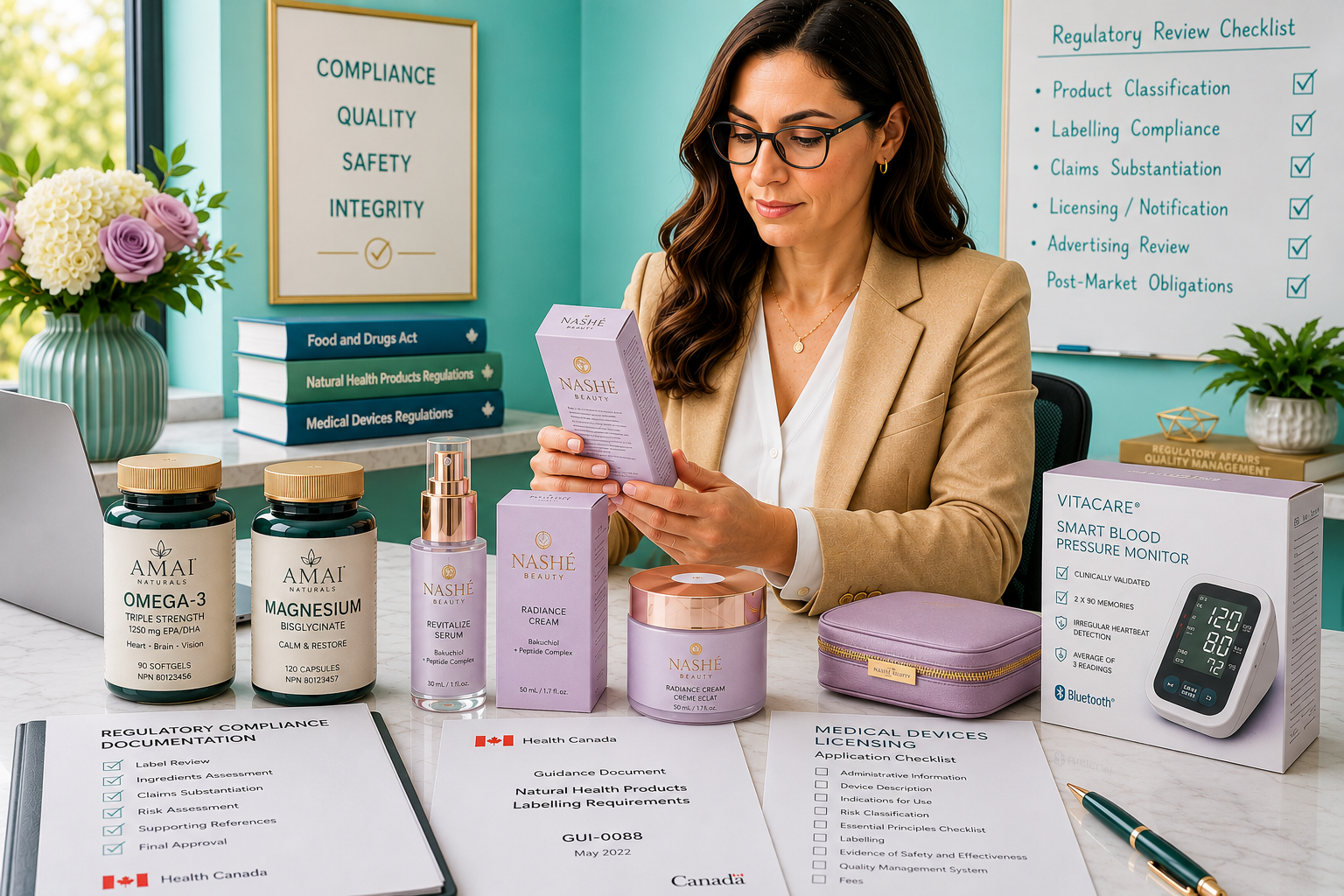
One of the most common and costly mistakes health product companies make is assuming they know how their product will be regulated in Canada.
A product that appears to be a cosmetic may actually be classified as a Natural Health Product (NHP). A wellness supplement may be considered a drug based on its claims. A health-related product may fall under the Medical Devices Regulations rather than the Natural Health Products Regulations.
Before investing in formulation, manufacturing, packaging, marketing, or licensing activities, companies should determine the correct regulatory classification of their product.
Product classification is the foundation of regulatory compliance in Canada. A mistake at this stage can lead to licensing delays, rejected applications, costly reformulations, enforcement actions, or product recalls.
This guide explains how Health Canada classifies products and what companies need to know before bringing products to market.
Why Product Classification Matters
Health Canada regulates products according to their intended purpose, ingredients, mechanism of action, claims, and overall risk profile.
The regulatory category determines:
- Licensing requirements
- Evidence requirements
- Labeling obligations
- Manufacturing standards
- Advertising restrictions
- Post-market responsibilities
Incorrect classification can result in:
- Application refusals
- Regulatory delays
- Additional costs
- Product launch setbacks
- Compliance enforcement
Determining the appropriate regulatory pathway should always be one of the first steps in product development.
The Four Main Product Categories in Canada
Most health-related products fall into one of four regulatory categories:
- Natural Health Products (NHPs)
- Cosmetics
- Medical Devices
- Drugs
While these categories may appear straightforward, many products fall into regulatory “grey areas” that require careful assessment.
What Is a Natural Health Product (NHP)?
Natural Health Products are regulated under Canada’s Natural Health Products Regulations.
These products are generally intended to maintain or promote health, support normal body functions, or help reduce the risk of certain conditions.
| Common Examples of NHPs
|
Typical NHP Claims
|
Key Regulatory Requirements
|
|
|
|
Most NHPs require a product licence and receive a Natural Product Number (NPN) before they can be sold in Canada.
What Is a Cosmetic?
Cosmetics are regulated under the Food and Drugs Act and Cosmetic Regulations.
A cosmetic is generally intended to cleanse, improve, or alter appearance without affecting body structure or function.
| Common Examples of Cosmetics
|
Typical Cosmetic Claims
|
|
|
Cosmetics do not require an NPN. Instead, manufacturers and importers typically submit a Cosmetic Notification Form (CNF).
When Does a Cosmetic Become an NHP?
This is one of the most common classification challenges. The determining factor is often the product claim.
| Claim #1: Cosmetic Claim | Claim #2: Potential NHP Claim |
| · Hydrates dry skin
· relieves/soothes dry skin · relieves chapping |
· Relieves symptoms of eczema
· help relieve minor burns including sunburn · assist healing of minor wounds |
The second claim introduces a therapeutic purpose, which may change the regulatory classification. This is one of the most common reasons why brands selling on Amazon Canada get their skincare products delisted.
Many beauty and skincare brands unintentionally trigger additional regulatory requirements through marketing language alone.
What Is a Medical Device?
Medical devices are instruments, apparatuses, technologies, or products used to diagnose, treat, monitor, or prevent medical conditions. Medical devices generally achieve their intended purpose through physical rather than pharmacological means.
Common Examples of Medical Devices
- Blood pressure monitors
- Blood glucose meters
- Pregnancy tests
- Surgical instruments
- Diagnostic kits
- Certain wound dressings
Device Classes in Canada
Health Canada classifies devices according to risk:
| Class | Class I | Class II | Class III | Class IV |
| Risk Level | Lowest risk | Moderate risk | Higher risk | Highest risk |
| Examples | · Bandages
· Examination gloves |
· Contact lenses
· Certain diagnostic devices |
· Orthopedic implants | · Pacemakers |
Classification affects licensing requirements and evidence expectations.
What Is a Drug?
Drugs are regulated under the Food and Drugs Act and Food and Drug Regulations. A drug is generally intended to:
- Diagnose disease
- Treat disease
- Prevent disease
- Restore or modify bodily functions
| Common Examples of Drugs | Typical Drug Claims |
|
|
Drug products face significantly more extensive regulatory requirements than NHPs or cosmetics.
How Health Canada Determines Classification
Health Canada evaluates several factors when determining classification.
Intended Use
What is the product intended to do? The intended purpose often carries significant weight.
Product Claims
Claims are among the most important classification factors.
A claim can shift a product from:
- Cosmetic to NHP
- NHP to Drug
- Device to Drug
Simply changing marketing language may alter the regulatory pathway.
Ingredients
Certain ingredients are associated with specific regulatory categories.
For example:
- Medicinal ingredients may support NHP classification.
- Pharmaceutical ingredients may trigger drug classification.
- Cosmetic ingredients may support cosmetic classification.
Mechanism of Action
Health Canada considers how the product achieves its intended purpose.
Physical Action
More likely to be a medical device.
Pharmacological Action
More likely to be a drug or NHP.
Common Product Classification Mistakes
Assuming Similar Products Have the Same Classification
A competitor’s product may have different claims, ingredients, or intended uses.
Developing Claims Before Classification
Marketing teams often create claims before regulatory assessments are completed. This can create significant compliance issues later.
Ignoring Regulatory Strategy During Product Development
Classification should influence:
- Formulation
- Claims
- Labeling
- Market positioning
Not the other way around.
Relying Solely on Internet Research
The internet is a great place to find information. However, product classification is often nuanced and requires professional regulatory analysis.
Why Classification Matters for Market Entry
Proper classification helps companies:
Reduce Regulatory Delays
Applications are submitted under the correct pathway.
Control Development Costs
Avoid reformulation and rework.
Accelerate Product Launches
Prevent licensing setbacks.
Improve Compliance
Reduce enforcement risk.
Support Global Expansion
Develop a stronger international regulatory strategy.
Regulatory Considerations for International Brands
Many international companies entering Canada assume their products will be classified the same way they are in other jurisdictions.
This is often not the case.
A dietary supplement sold in the United States may require an NPN in Canada. A cosmetic sold internationally may require additional review due to claims made in Canada.
Market-entry planning should always include a Canadian classification assessment.
How GNHP Consulting Helps
At GNHP Consulting, we help companies determine the correct regulatory pathway before investing in licensing, manufacturing, labeling, and commercialization activities.
Our Services Include
- Product classification assessments
- Regulatory strategy development
- NHP licensing support
- Cosmetic compliance reviews
- Medical device regulatory support
- Label and claims reviews
- Market-entry consulting
- International regulatory strategy
Whether you are launching a new product or expanding into Canada, we help reduce uncertainty and establish a clear regulatory path forward.
Ready to Determine Your Product’s Regulatory Classification?
A proper classification assessment can save months of delays and thousands of dollars in unnecessary regulatory costs.
If you are unsure whether your product is a Natural Health Product, cosmetic, medical device, or drug, GNHP Consulting can help you navigate Health Canada’s requirements and develop a compliant market-entry strategy.
Contact GNHP Consulting today to discuss your product and receive expert regulatory guidance.
Health Canada Authority References
Relevant Health Canada resources include:
- Natural Health Products Regulations
- Food and Drugs Act
- Food and Drug Regulations
- Medical Devices Regulations
- Cosmetic Regulations
- Guidance Documents on Product Classification
- Natural Health Products Ingredient Database
- Licensed Natural Health Products Database
These resources provide the regulatory framework used by Health Canada when assessing product classification.