
If you plan to sell a natural health product in Canada, obtaining a Natural Product Number (NPN) is one of the most important regulatory requirements. Whether you are launching a dietary supplement, herbal product, vitamin, mineral, probiotic, or traditional medicine, Health Canada generally requires product licensing before the product can be legally marketed.
Many companies underestimate the complexity of the Natural Health Product (NHP) licensing process. Incomplete applications, unsupported claims, and formulation issues frequently result in delays or refusals.
This guide explains the NPN application process, common pitfalls, and best practices for achieving successful product licensing in Canada.
What Is an NPN?
An NPN (Natural Product Number) is an eight-digit numerical unique identifier assigned by Health Canada to licensed natural health products.
The NPN confirms that Health Canada has reviewed and authorized the product for sale based on:
- Safety
- Efficacy
- Quality
- Recommended conditions of use
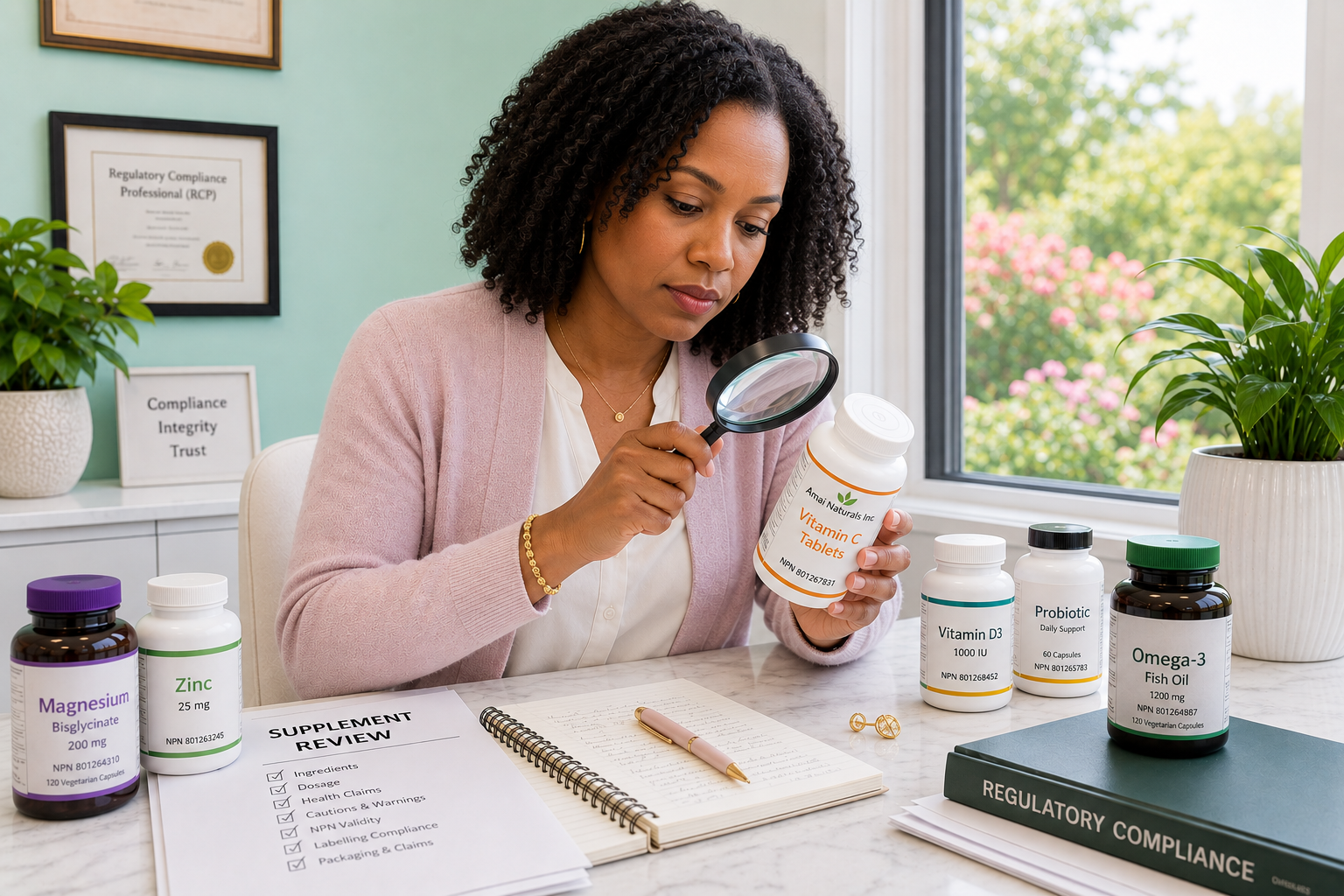
Once approved, the NPN must appear on the product label.
Examples of Products That Commonly Require an NPN
- Vitamins
- Minerals
- Herbal supplements
- Traditional medicines
- Probiotics
- Amino acid products
- Certain homeopathic medicines
- Certain personal care products such as sunscreens, antiperspirants, medicated shampoos and mouthwashes
Why Is an NPN Required?
It is required for market entry in Canada: manufacturers or importers must obtain an NPN before legally selling an NHP so regulators can verify that the product’s ingredients, recommended uses, dose, and claims meet Canadian regulatory standards. Displaying the NPN on packaging also lets consumers and health professionals confirm that the product has undergone Health Canada assessment.
Under Canada’s Natural Health Products Regulations, most natural health products must receive a product licence before they can be sold.
Health Canada evaluates:
Product Ingredients
Each medicinal ingredient must be acceptable for use in Canada.
Health Claims
Claims must be supported by scientific or traditional-use evidence.
Dosage Information
Recommended use, dose, route of administration, and duration of use must be appropriate.
Safety Profile
Potential risks, contraindications, and warnings must be adequately addressed.
Step 1: Confirm Product Classification
Before preparing an application, companies must determine whether the product is:
- Natural Health Product (NHP)
- Cosmetic
- Drug
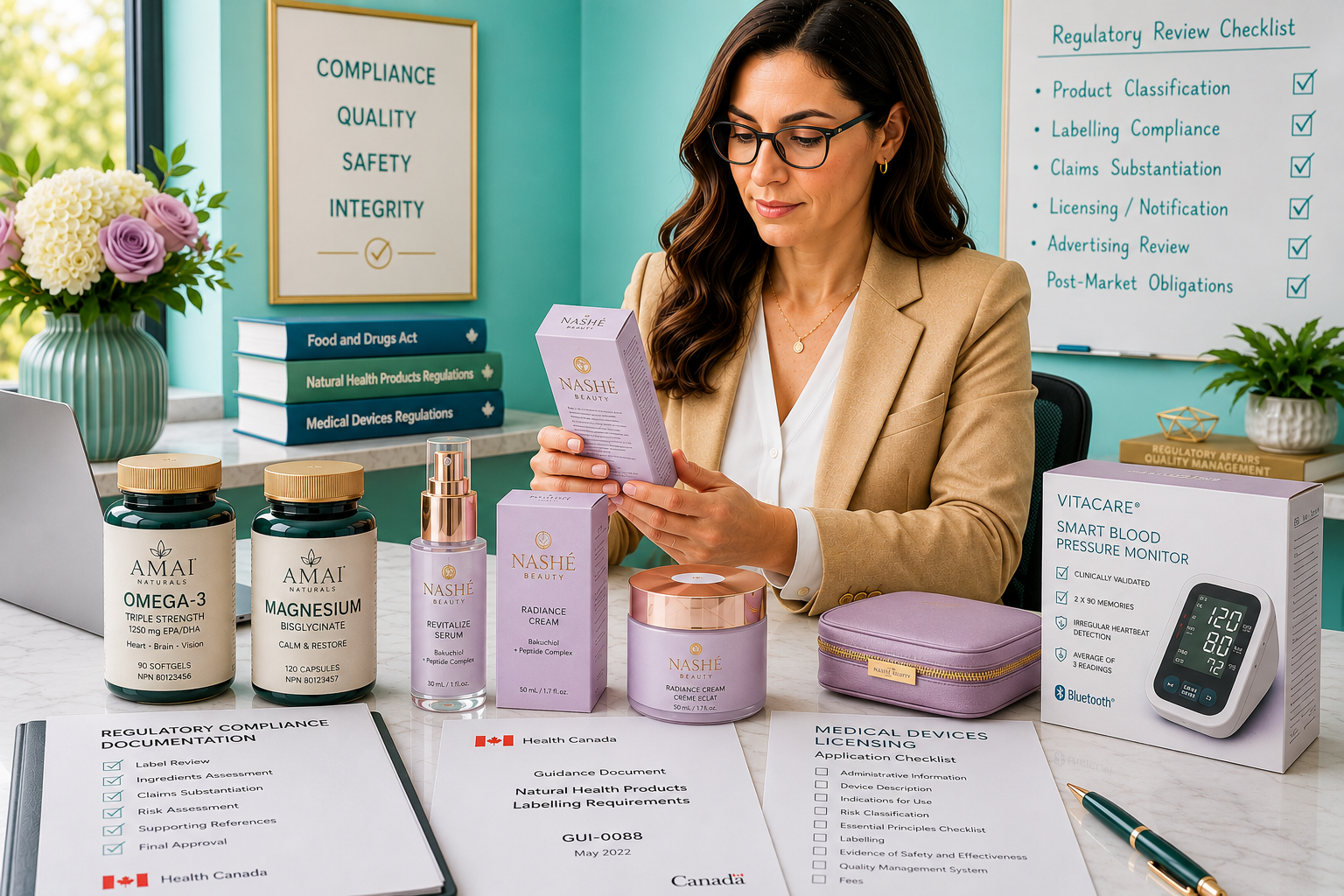
- Medical Device
Classification is critical because each category follows different regulatory requirements. Many licensing delays occur because companies submit products under the wrong regulatory framework.
Natural Health Products
- Vitamin D capsules
- Elderberry supplements
- Probiotic formulations
- Topical formulations with therapeutic claims
Cosmetics
- Moisturizers
- Shampoos
- Lip balms without therapeutic claims
Drugs
- Prescription medications
- Over the counter medications
- Products intended to diagnose or treat serious diseases
Medical Devices
- Blood glucose monitors
- Diagnostic kits
- Certain wound care products
Step 2: Review Ingredients Against Health Canada Requirements
Every medicinal ingredient must be acceptable under Health Canada’s regulatory framework.
Key Considerations
- Ingredient identity
- Source material
- Potency
- Safety profile
- Existing monographs
Products containing non-compliant ingredients may require additional evidence or reformulation.
Companies should review:
- NHP Ingredient Database
- Licensed Natural Health Product Database
- Relevant Health Canada monographs
Using existing monographs often results in faster approvals.
Step 3: Define Product Claims Carefully
Claims are one of the most heavily scrutinized aspects of an NPN application.
Examples of Acceptable Claims
- Helps maintain immune function.
- Helps support digestive health.
- Source of antioxidants.
Examples of Problematic Claims
- Cures diabetes.
- Treats cancer.
- Eliminates arthritis.
Claims must align with available evidence and regulatory requirements. Overstated claims are a common reason for application deficiencies.
Step 4: Gather Supporting Evidence
Health Canada requires evidence supporting the safety and efficacy of proposed claims.
Health Canada Monographs
Often the fastest route to approval.
Scientific Literature
Peer-reviewed clinical studies and published research.
Traditional Use References
Traditional Chinese Medicine, Ayurveda, Indigenous medicine, and other recognized systems.
Published Pharmacopoeias
Recognized reference standards may support ingredient use.
The stronger the evidence package, the smoother the review process.
Step 5: Prepare Product Specifications
Product specifications are the documented set of attributes, criteria, and acceptance limits that define a product. These specifications provide a clear, auditable basis for release testing, regulatory submissions (such as an NPN), and consistent product quality throughout the product lifecycle.
Product specifications establish quality requirements.
Specifications Typically Include
Identity
Verification that ingredients are what they claim to be.
Potency
Confirmation that active ingredient levels meet label claims.
Purity
Testing for contaminants.
Microbiological Quality
Verification that microbial limits are met.
Quality documentation is a key component of Health Canada’s evaluation process.
Step 6: Complete the Product Licence Application
The application must include:
Product Information
- Product name
- Dosage form
- Recommended use
Ingredient Information
- Medicinal ingredients
- Non-medicinal ingredients
- Quantities
Risk Information
- Cautions
- Contraindications
- Known adverse reactions
Supporting Evidence
Scientific and traditional references supporting claims.
Applications that are incomplete or inconsistent frequently experience delays.
Step 7: Submit to Health Canada
Applications are submitted electronically through Health Canada’s licensing process.
Health Canada then conducts a review of:
- Formulation
- Claims
- Safety
- Evidence
- Label information
Additional information requests may occur if deficiencies are identified.
Step 8: Respond to Information Requests Promptly
Many applications receive clarification requests during review.
Common Requests Involve
- Additional evidence
- Revised claims
- Label updates
- Ingredient clarification
Prompt and accurate responses help avoid unnecessary delays.
Common Reasons NPN Applications Are Delayed
Health Canada commonly identifies issues involving:
Unsupported Claims
Claims exceeding available evidence.
Incorrect Ingredient Information
Ingredient names or quantities that do not align with regulatory requirements.
Missing Risk Statements
Required warnings omitted from the application.
Inadequate Evidence
Insufficient support for product claims.
Classification Errors
Products submitted under the wrong regulatory category.
How Long Does It Take to Obtain an NPN?
Approval timelines vary depending on:
- Product complexity
- Evidence quality
- Monograph availability
- Application completeness
Products fully supported by established monographs generally move through the process more efficiently than products requiring extensive evidence review.
Best Practices for Faster Approval
Companies can improve approval success by:
- Conducting classification assessments early
- Leveraging Health Canada monographs
- Preparing compliant labels
- Developing robust evidence packages
- Reviewing ingredients before submission
- Working with experienced regulatory consultants
A proactive approach often reduces review cycles and accelerates market entry.
Why Regulatory Strategy Matters
Obtaining an NPN is not simply an administrative exercise.
Strategic regulatory planning influences:
- Approval timelines
- Market access
- Product positioning
- Label claims
- Long-term compliance
Companies that incorporate regulatory considerations during product development are often better positioned for commercial success.
How Global NHP Consulting Can Help
GNHP Consulting supports health product companies throughout the entire licensing process, including:
- Product classification assessments
- Ingredient reviews
- NPN application preparation
- Evidence evaluations
- Label compliance reviews
- Regulatory strategy development
- Health Canada submission support
Whether you are launching your first supplement or expanding an established product portfolio, our team helps navigate Canada’s regulatory requirements efficiently and confidently.
Ready to Obtain Your NPN?
Contact GNHP Consulting today to discuss your product and develop a licensing strategy that supports both compliance and business growth.